Skilled Nursing vs. Personal Care at Home: Understanding the Difference
Skilled nursing and personal care can both take place in a person’s home, but the services require different qualifications and meet different types of needs.
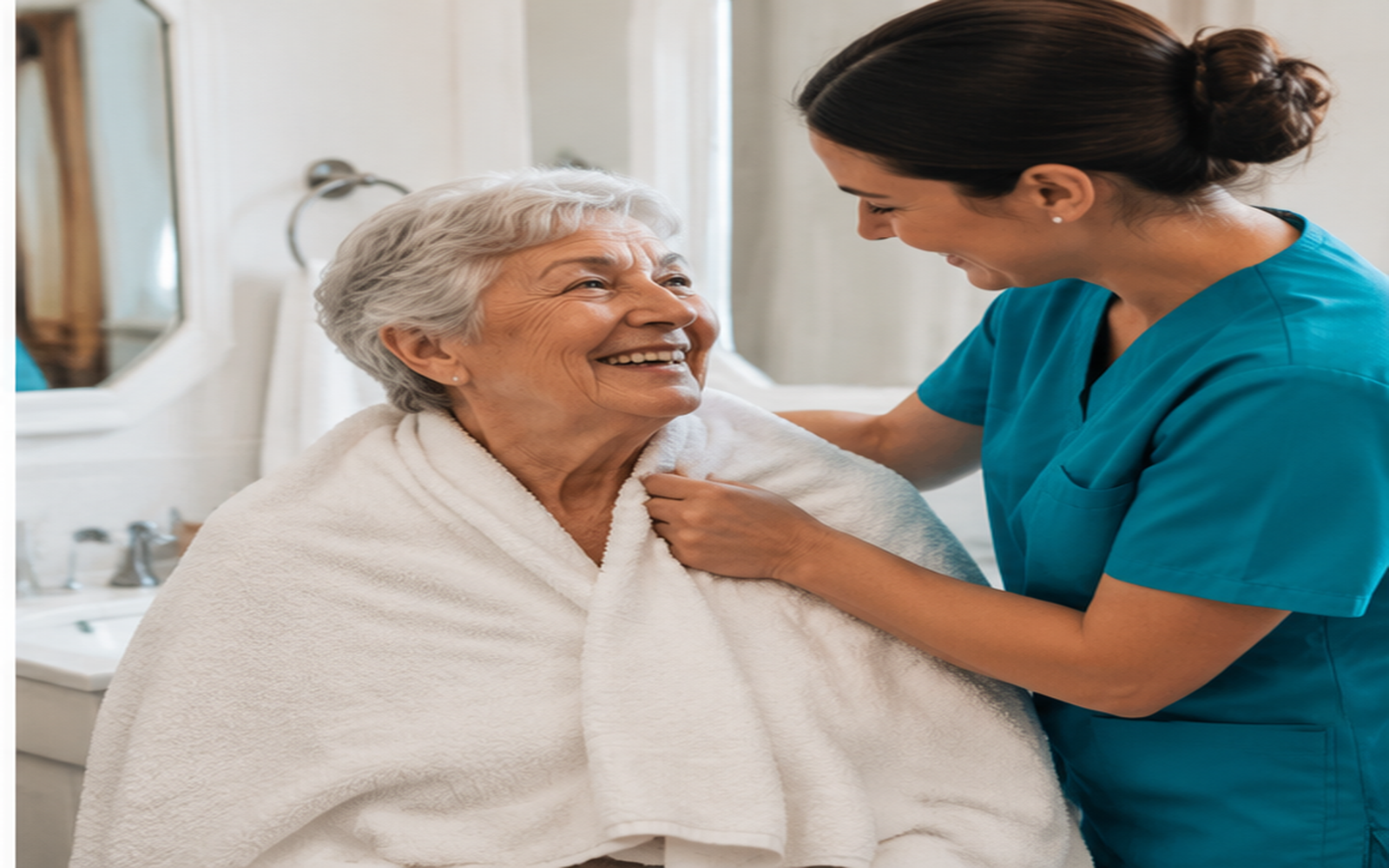
A caregiver helping someone get dressed and a nurse providing clinical treatment may both be described casually as “home care.” Professionally, however, they are performing different roles.
Understanding skilled nursing vs. personal care helps families arrange the right level of support and avoids expecting a caregiver to perform a task that requires a licensed nurse.
What is personal care at home?
Personal care focuses on assistance with ordinary activities of daily living when those activities have become difficult to manage independently.
Depending on the person’s care plan, support may include:
- Bathing and personal hygiene.
- Dressing.
- Grooming.
- Toileting.
- Eating and routine mealtime assistance.
- Ambulation or transfers where appropriate.
- Related household support included in the service plan.
Georgia’s private-home-care rules identify personal-care tasks separately from nursing services.
Learn more about Personal Care Assistance .
What is skilled nursing at home?
Skilled nursing involves healthcare needs requiring the qualifications and professional scope of a licensed nurse.
Under Georgia’s private-home-care rules, nursing services are performed by a registered professional nurse or licensed practical nurse under the applicable supervisory and professional requirements.
Depending on the clinical plan, nursing services may involve assessment, monitoring, skilled treatment, nursing education, and communication about relevant changes in the person’s condition.
Learn more about Skilled Nursing .
Skilled nursing vs. personal care: the key differences
A simple way to understand the difference
Imagine an older adult who has difficulty getting into the shower because of reduced mobility.
Appropriate assistance with the bathing routine may fall within personal care.
Now imagine the same person also has a surgical wound requiring skilled assessment and treatment.
The wound-related care may require a nurse.
The fact that both needs occur in the bathroom or in the same person’s home does not make them the same type of care.
Can a nurse provide personal-care tasks?
The professional categories are different, but that does not mean they can never overlap.
Georgia’s rules expressly recognize that licensed nurses may perform personal-care tasks.
What should not happen is the reverse assumption: a person assigned to non-clinical personal care should not automatically be expected to perform a nursing task simply because the client needs it.
When might someone need personal care?
Personal care may be appropriate when the main difficulty involves everyday self-care rather than a clinical nursing need.
Examples include:
- Bathing has become physically difficult.
- Dressing takes considerably more effort.
- Grooming or toileting requires assistance.
- Mobility limitations affect everyday routines.
- Family members are regularly providing hands-on personal help.
When might someone need skilled nursing?
Nursing may be appropriate when the person has a healthcare need requiring professional nursing assessment, judgment, monitoring, or treatment.
Medicare lists examples of qualifying skilled home-health services such as wound care, injections, certain IV or nutrition therapy, education, and monitoring of serious illness or unstable health status when program requirements are met.
Whether a particular nursing service is appropriate should be determined according to the individual’s clinical needs and applicable provider requirements.
Some people need both types of care
A person recovering from surgery may need a nurse for a defined clinical service and a personal-care caregiver for assistance with dressing, bathing, or mobility at other times.
Another person with a chronic condition may have periodic nursing needs but require daily non-clinical assistance.
A well-structured plan should make the roles clear so the person receives the right support from the right professional.
Assigning a task to the appropriate professional helps protect the client and the caregiver. Families should always ask who is responsible for a particular service if they are unsure whether it is personal care or nursing care.
What if care needs change?
Care needs can change after illness, hospitalization, a fall, a new diagnosis, worsening mobility, or another change in functioning.
A person who initially needed only help with personal routines may later develop clinical needs. Likewise, someone may no longer require nursing after a temporary recovery period but continue benefiting from personal support.
Care plans should therefore be reviewed rather than assuming the original level of support will always remain appropriate.
Match the service to the need
The most important difference between skilled nursing vs. personal care is not where the service happens. Both can happen at home.
The difference lies in what the person needs and who is appropriately qualified to provide it.
Explore Skilled Nursing and Personal Care Assistance , review all AtoZ Care Partners services , or contact our team .