
What Is Personal Care Assistance? A Guide to Daily Living Support
Personal care assistance helps people manage everyday activities that have become difficult while allowing them to remain involved in their routines, choices, and life at home.
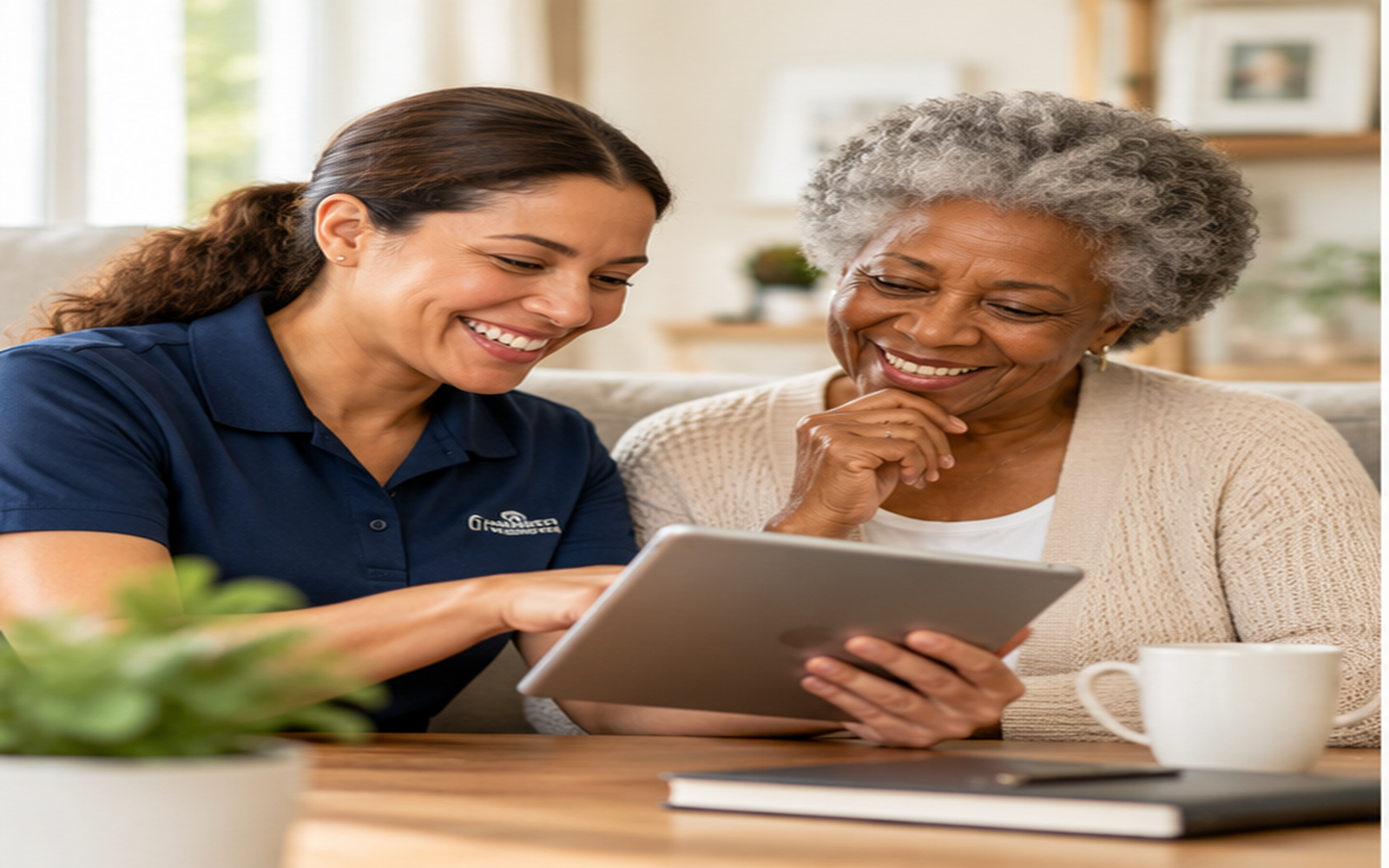
Everyday activities can become harder because of aging, disability, reduced mobility, recovery from illness, or a change in health. Personal care assistance provides practical help with those routines while supporting the person to do as much as they reasonably can for themselves.
The National Institute on Aging describes personal care as assistance with activities of daily living such as bathing, dressing, grooming, using the toilet, eating, and moving around.
These are ordinary activities, but they are also highly personal. Good care therefore involves more than completing a list of tasks. It should take account of the individual’s preferences, privacy, abilities, routines, and care plan.
What does personal care assistance mean?
Personal care assistance is support with everyday activities that a person may no longer be able to complete safely, comfortably, or independently.
The amount of help can vary considerably.
One person may need only limited assistance getting dressed in the morning. Another may need more regular support with bathing, mobility, grooming, toileting, meals, and other parts of the daily routine.
The aim should not automatically be to take over. When appropriate, support can be provided in a way that allows the individual to continue participating in the activity.
Appropriate personal care should support dignity and independence rather than unnecessarily doing everything for the person receiving care.
What activities can personal care assistance include?
The exact support depends on the individual and the agreed care plan, but personal care commonly relates to several important areas of daily living.
Assistance may help a person manage bathing and other hygiene routines more comfortably and according to their care plan.
Help can range from preparing clothing to assisting with dressing when mobility, balance, pain, or another limitation makes the task difficult.
Grooming support may include routine assistance with hair, oral care, shaving, and other everyday personal care activities.
A care plan may include assistance moving around the home or transferring between positions when that support is appropriate to the person’s needs.
Discreet assistance with toileting can be an important part of personal care when someone has difficulty completing the routine independently.
Depending on the care plan, assistance may help make everyday meals and eating routines more manageable.
What are activities of daily living?
The phrase activities of daily living, often shortened to ADLs, refers to essential everyday activities people generally need to complete to care for themselves.
The National Institute on Aging identifies personal care activities such as bathing, dressing, grooming, using the toilet, eating, and moving around as examples of activities of daily living.
Difficulty with one or more of these activities can be one indication that a person may benefit from additional support at home.
The amount of assistance needed should be considered individually. Someone who only needs help getting in and out of the shower has very different needs from someone requiring assistance throughout several daily routines.
Who may benefit from personal care assistance?
Personal care assistance is not limited to one age group or diagnosis.
It may be appropriate for:
- Older adults who want to continue living at home but are finding some daily routines more difficult.
- Adults living with physical disabilities or mobility limitations.
- Someone recovering from an illness, surgery, or hospitalization who temporarily needs additional assistance.
- People whose chronic health conditions affect their ability to manage everyday activities.
- Individuals who need support with several daily routines but do not necessarily need continuous skilled nursing.
- Families who are providing increasing amounts of hands-on help and need additional support.
Personal care assistance should support independence
Accepting help with daily activities does not automatically mean giving up independence.
In fact, appropriate assistance may help someone continue living in their own home and participating in routines that matter to them.
Consider dressing as an example. One person may need a caregiver to lay out clothing and remain nearby. Another may need hands-on help fastening clothing. A third may need much more extensive assistance.
These are different care needs, even though all three could be described broadly as help with dressing.
The care plan should therefore reflect what the individual can do, where assistance is needed, and how support can be provided without unnecessarily removing choice or participation.
How is personal care different from companion care?
The services can overlap in everyday life, but the primary purpose is different.
Personal care generally involves more direct assistance with activities such as bathing, dressing, grooming, toileting, eating, and mobility.
Companion Care is more focused on presence, conversation, social interaction, routine activities, and supportive companionship.
Appropriate assistance with personal routines such as bathing, dressing, grooming, toileting, eating, or mobility according to the care plan.
Conversation, presence, routine engagement, and companionship that can help reduce isolation and support everyday life at home.
Some individuals may benefit from both types of support.
How is personal care different from skilled nursing?
Personal care assistance should also be distinguished from skilled nursing.
Skilled nursing involves clinical services that must be provided by appropriately licensed healthcare professionals within their professional scope.
Personal care tasks and nursing tasks should not be treated as interchangeable simply because both services happen in someone’s home.
If the person has a clinical need such as wound care, certain injections, skilled monitoring, or another nursing service, speak with an appropriate healthcare professional and explore Skilled Nursing when applicable.
Personal care assistance in Georgia
Families arranging home care in Georgia should understand the type of provider they are working with and the services that provider is permitted to offer.
The Georgia Department of Community Health describes private home care services as direct care provided in a person’s residence and includes nursing services, personal care tasks, and companion or sitter tasks.
Georgia generally requires private home care providers to hold a license or provisional license from the Department of Community Health unless a specific exemption applies.
When comparing providers, ask clearly what kind of services are being offered, who will provide them, and how the organization determines that staff members are appropriate for their assigned responsibilities.
What should a personal care plan consider?
Personal care should be based on the individual rather than a standard list of tasks.
A useful discussion may consider:
- Which daily activities are currently difficult.
- What the person can still complete independently.
- How much assistance is actually needed.
- The person’s usual routines and preferences.
- Mobility, balance, and other relevant safety concerns.
- The days and times when assistance is most useful.
- Family involvement and communication preferences.
- Whether any needs require a healthcare professional rather than a personal care caregiver.
When may it be time to consider personal care assistance?
Families often begin considering support after noticing a change rather than after one specific event.
Possible signs include:
- Bathing or grooming becoming difficult.
- Increased difficulty getting dressed.
- Problems moving safely through the home.
- Family members regularly stepping in to complete personal routines.
- Everyday activities taking considerably more effort than before.
- Concern that the individual may no longer be managing some personal routines safely.
A change in daily functioning can also have a medical cause. Significant or sudden changes should be discussed with an appropriate healthcare professional rather than automatically being attributed to aging.
Personal care can be only one part of support at home
Many people need a combination of services rather than one isolated type of help.
Someone receiving personal care may also benefit from Companion Care for social interaction or Housekeeping for routine household support.
If clinical needs are present, appropriately qualified professionals may also need to be involved.
The most useful care arrangement is the one that reflects the person's actual needs rather than simply adding as many services as possible.
Finding the right level of personal care assistance
Personal care assistance can help make daily routines more manageable while allowing a person to remain in a familiar home environment.
The right amount of support is different for everyone. Some people need help with one part of the morning routine, while others may need assistance at several points throughout the day.
Start with the activities that have become difficult, involve the person receiving care in decisions whenever possible, and choose a provider that clearly explains what its caregivers can and cannot do.
Learn more about Personal Care Assistance from AtoZ Care Partners , explore our full range of home care services , or contact our team to discuss the support you are considering.
You can also continue exploring our home care resources for more guidance for individuals, families, and caregivers.